What is the order of ESOL levels?
The usual learning pathway is Pre-Entry, Entry 1, Entry 2, Entry 3, Level 1 and Level 2. Pre-Entry supports learners who are not yet ready for Entry 1. ESOL Skills for Life qualifications are available from Entry 1 to Level 2.
A level is a starting point for learning, not a judgement of your ability to learn. You may also need different levels of support for different skills.
Pre-Entry: building a foundation
At this stage, learning can focus on familiar words, sounds and very short exchanges. You might practise recognising your name, saying a greeting or understanding a simple classroom instruction.
If you are also new to reading and writing, tell the provider. You may need support with forming letters as well as learning English words.
Entry 1: simple everyday communication
Learners begin working with short, familiar messages and basic exchanges. An example practice task is asking where a place is and recognising one simple direction.
For reading practice, try this original example: The library opens at ten. It closes at four. Can you find the opening time without translating every word?
Entry 2: adding detail
Tasks become more varied as you develop vocabulary and sentence patterns. You can practise asking for information, describing familiar things and finding details in a short text.
For example, read a message about a changed appointment. Identify both the new day and the new time, then write a short reply.
Entry 3: handling longer tasks
You work towards understanding and producing more connected language. Everyday and work situations may involve explaining a problem, following a longer message or giving reasons for a choice.
A practice task could be writing to explain why you cannot attend a class and asking what work you should complete.
Level 1 and Level 2: developing independence
Learning at these stages involves more demanding texts and communication. You may practise organising explanations, discussing ideas and adjusting your language for different readers or listeners.
For example, compare information from two course descriptions and explain which would suit your needs. These examples illustrate increasing challenge; your provider's syllabus and assessment requirements determine the actual tasks.
How do you find your level?
Ask an ESOL provider for an initial assessment. Explain what you can do comfortably and what still causes difficulty. Being able to chat does not automatically mean that reading and writing will feel equally easy.
Do not choose a class only because a friend attends it. A suitable class should help you understand the work while giving you new skills to develop.
How can you check your progress?
Keep a short piece of writing or a recording from the beginning of your learning. Repeat a similar task later and compare how clearly you communicate. Note what you can now do independently and what feedback you still need.
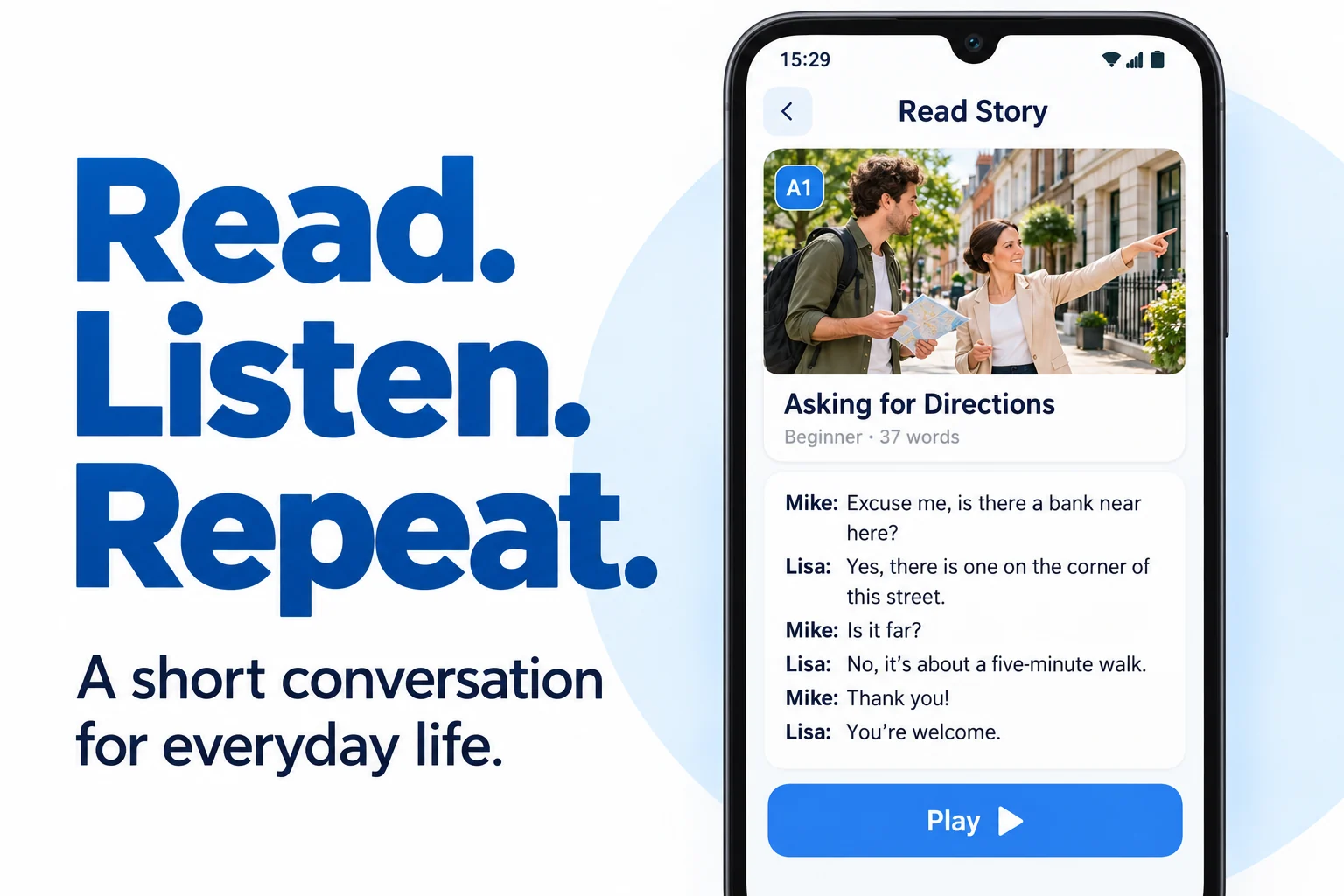
For extra practice, use ESOL English's reading, videos and quizzes through the download buttons above. App categories such as Beginner are learning labels; they do not certify an official ESOL level.
Do all classes give a qualification?
No. Some classes focus on practice without an exam. Trinity's Skills for Life provision includes separate awards in Reading, Writing, and Speaking and Listening. Ask your provider exactly which course and assessment you are joining.
Sources and level information
https://learnenglishwest.org/what-is-esol/
https://trinitycollege.com/qualifications/english-language/ESOL-skills-for-life