What is an ESOL course?
An ESOL course helps people who speak another first language develop their English. Lessons usually combine speaking, listening, reading and writing with vocabulary and grammar you can use outside the classroom.
For a beginner, that might mean introducing yourself, understanding a simple instruction or writing your name and address on a form. Later, you may work on longer conversations, workplace messages and more detailed texts.
What will you learn?
Everyday communication: asking for help, checking information and making yourself understood.
Reading: finding important details in notices, messages, letters and short texts.
Writing: building clear sentences, completing forms and writing messages for a particular purpose.
Speaking and listening: taking turns, asking follow-up questions and understanding what another person means.
The activities should match your level. Ask a provider for examples of the tasks you will do, especially if you have a specific work or study goal.
How do you choose the right level?
Many providers arrange an initial assessment or a short conversation before placing you in a class. It helps them understand what you can already do and where you need support.
Tell the tutor if reading and writing are harder than speaking. Also mention any help you need with using a computer or joining an online lesson. You are looking for a course that gives you enough support and useful practice.
Classroom, online or community learning?
A classroom course gives you regular contact with a teacher and other learners. Check the location and whether the hours fit your work or family commitments.
An online course can remove the need to travel. Ask whether lessons happen live, whether you need a computer and how you receive feedback.
A community class or conversation group can provide a place to practise speaking. Check whether it follows a course programme or offers an exam, because these are separate features.
Are ESOL courses free?
Some providers offer funded places; others charge fees. Eligibility and costs vary. Ask the provider to check your circumstances rather than assuming that every ESOL course is free.
Find out whether any quoted price includes learning materials and assessment. If a funded place is unavailable, ask about other local options or a waiting list.
Questions to ask before enrolling
What level is the class, and how will you assess my starting point?
Which skills will we practise, and how will you give feedback?
When does the course meet, and how long does it run?
What will I need to pay, including materials or exam fees?
Does it lead to a qualification, or is it a course without an exam?
What can I study after finishing?
How to practise between classes
Choose a topic from your lesson and use it again at home. Read a short text, say one useful sentence aloud and write a similar sentence about your own situation. Bring anything confusing to your next class.
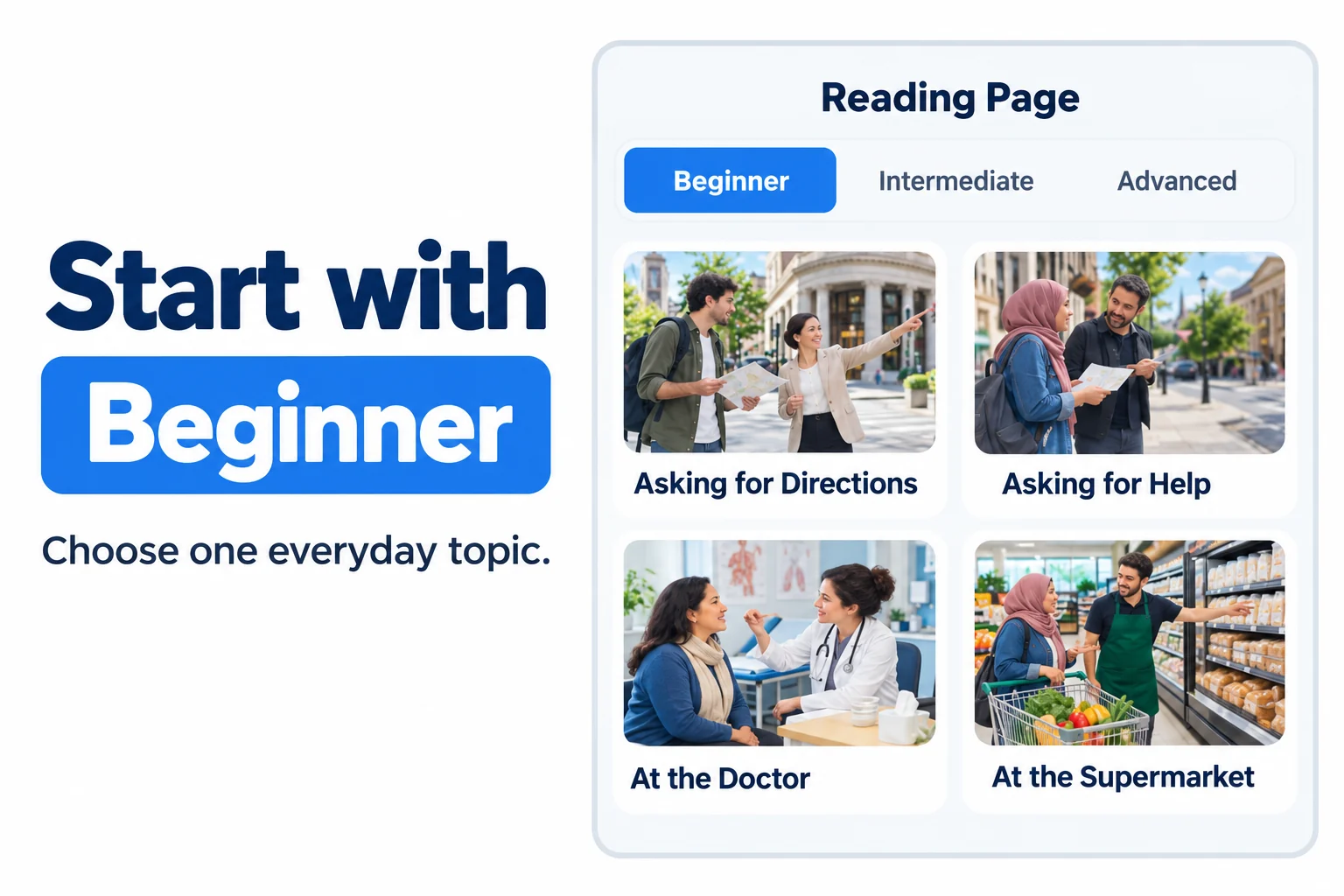
ESOL English provides reading, videos and quizzes for extra phone practice. Use the App Store or Google Play button above to download it. It is a practice app; ask your course provider about recognised qualifications.
Where can you find a course?
Check your local college or council adult learning service. Course directories and community organisations may also help you find nearby provision. Before joining, confirm the current timetable, level, cost and enrolment process directly with the provider.