What does ESOL mean?
ESOL stands for English for Speakers of Other Languages. It describes English learning for people whose first language is different. In the UK, the term commonly refers to English classes that help people take part in everyday life, work and education.
You might want to understand a letter from school, explain a problem at work or ask a question at an appointment. ESOL learning connects English with situations like these.
Who is ESOL for?
ESOL is for learners with different experiences of English. You can begin with very little English or join a class to build on skills you already have. You do not need to be learning English as your second language: it may be your third or fourth.
Your starting point depends on what you can understand and communicate. Someone who speaks confidently may still need help with reading or spelling. A teacher can identify these different needs before recommending a class.
What do you learn in ESOL?
Speaking and listening help you ask questions, follow a conversation and explain what you need. Reading helps you understand signs, messages and everyday information. Writing helps you complete forms and communicate in sentences.
Vocabulary, grammar and pronunciation support all four skills. For example, a lesson about appointments might combine reading a time, listening for a date, asking for a different appointment and writing a short message.
How do ESOL courses work?
You can find classes through colleges, adult education services and community organisations. Some courses prepare learners for an assessed qualification. Others focus on conversation and confidence without an exam.
Providers may offer classroom learning, online lessons or a combination. Before enrolling, ask about the level, timetable, fees and whether the course includes an assessment. Availability and funding depend on the provider and your circumstances.
What are the ESOL levels?
You may see Pre-Entry classes followed by Entry 1, Entry 2, Entry 3, Level 1 and Level 2. These labels describe a progression through increasingly demanding language tasks. A provider's initial assessment helps you find a suitable starting point.
You do not have to wait until you feel confident to ask about a class. Tell the provider which situations are difficult and what you want to achieve.
Is ESOL the same as ESL or EFL?
These terms all relate to learning English. ESL means English as a Second Language. EFL means English as a Foreign Language and often describes learning English where it is not the main everyday language. Their use varies between countries and institutions.
For a learner, the useful question is whether a course matches your current skills and the English you need.
How can you start learning?
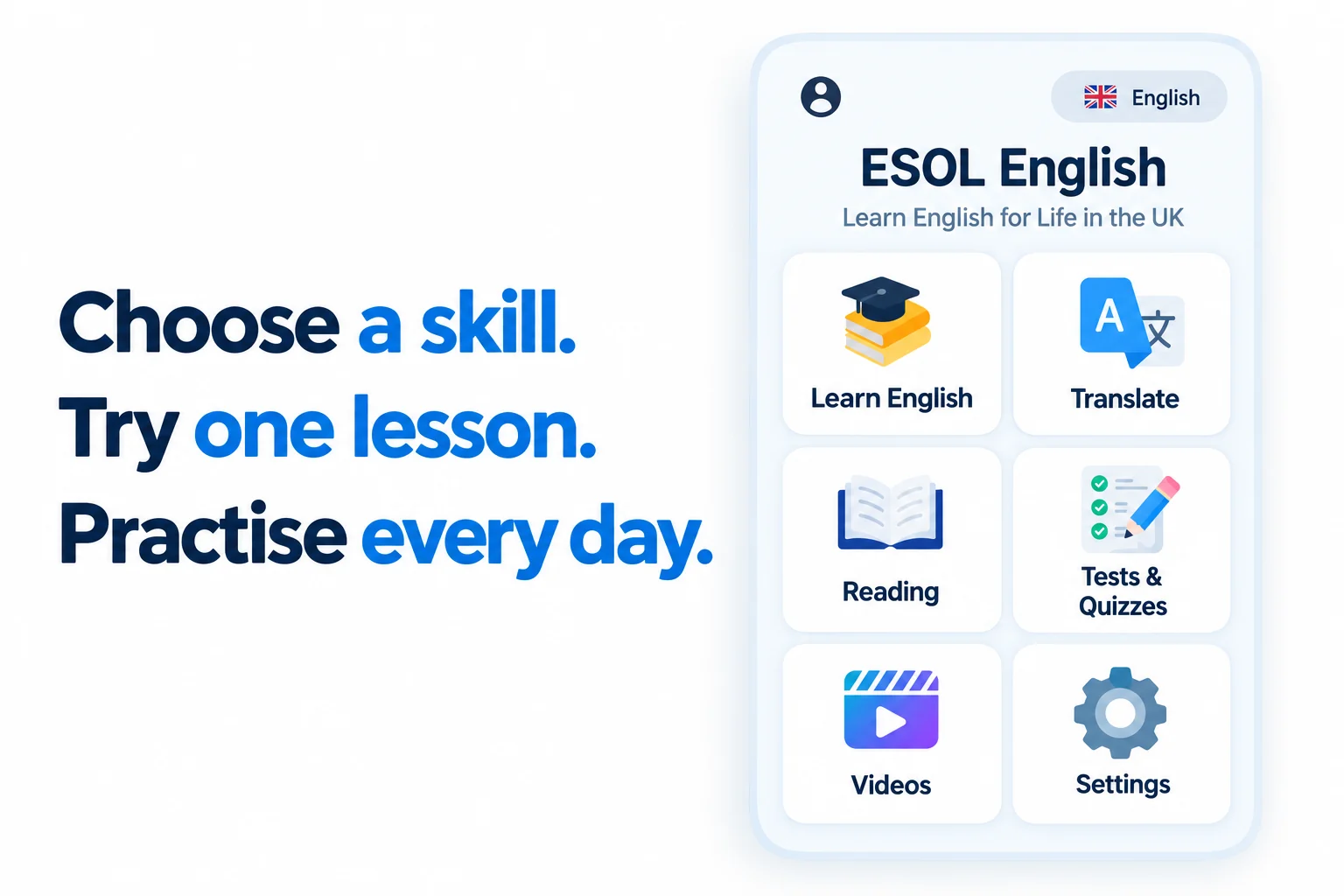
Choose one real situation you want to handle better. Ask a local provider about a suitable course, then practise the same topic between lessons. You can use the ESOL English app's reading, videos and quizzes for additional practice; the download buttons above open its official store pages.
Common questions
Can beginners study ESOL? Yes. Ask about beginner or Pre-Entry provision and an initial assessment.
Can you learn at home? Yes. Online materials and app activities can support home practice. Live teaching gives you opportunities to ask questions and receive feedback.
Does an app give you an ESOL qualification? Practice and a formal qualification are different. Ask an accredited course provider about assessment and certification.
Sources and further reading
https://www.nidirect.gov.uk/articles/english-speakers-other-languages-esol